
Choosing between open and closed hearing aid domes is one of the most critical decisions for achieving optimal sound quality and wearing comfort. Open domes feature ventilation holes that allow natural air and sound to pass through, making them ideal for mild, high-frequency hearing loss without causing a "plugged-ear" sensation. In contrast, closed domes completely seal the ear canal, trapping sound waves to provide the deep bass and high-power amplification required for severe hearing impairment. Understanding these structural differences ensures you select the correct configuration to maximize your device's clinical performance.
Hearing aid domes are the small, mushroom-shaped silicone tips that attach to the end of a hearing aid's thin tube or receiver. They sit directly inside your ear canal, serving as the bridge between the device and your eardrum. Despite their small size, the presence or absence of ventilation holes completely alters how you perceive sound.
Open hearing aid domes are manufactured with visible holes or vents built into the silicone wall. This physical design allows low-frequency ambient sounds and natural airflow to enter and exit your ear canal freely. By keeping the canal unblocked, open domes allow you to hear your own voice naturally, making them compatible with both discreet behind-the-ear (BTE) and in-the-ear (ITE) models that prioritize cosmetic appeal.
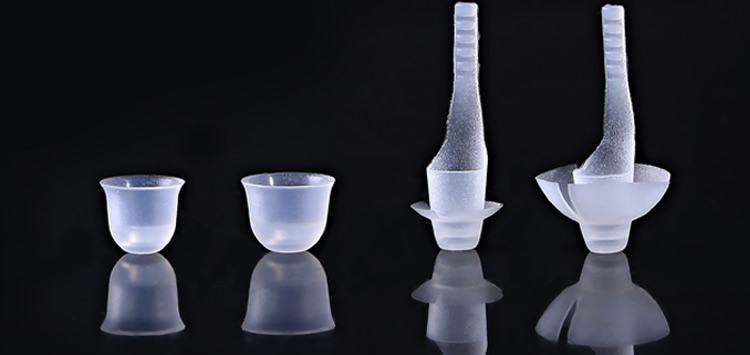
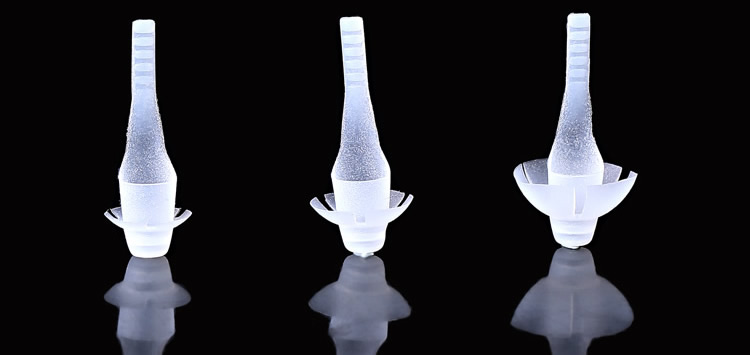
Closed hearing aid domes feature a solid silicone barrier with no ventilation holes. When inserted, the closed dome creates a tight acoustic seal inside your ear canal. This structural seal ensures that only the sound produced by the hearing aid processor can reach your inner ear membrane, blocking out external noises and preventing amplified sound from leaking back out.
The choice between these two dome architectures directly dictates the level of amplification a user can tolerate. Selecting the wrong style can result in either an unnatural "talking-in-a-barrel" sensation or annoying whistling sounds.
| Feature Comparison | Open Hearing Aid Domes | Closed Hearing Aid Domes |
|---|---|---|
| Best Suited For | Mild-to-moderate, high-frequency hearing loss. | Moderate-to-severe hearing impairment. |
| Acoustic Seal | Unsealed; allows natural air and external sound entry. | Fully sealed; blocks external ambient noise. |
| The Occlusion Effect | Extremely Low; your own voice sounds natural. | Higher; may cause your voice to sound muffled or boomy. |
| Feedback Whistling Risk | Higher if used for high-power volume settings. | Extremely Low; prevents sound leakage. |
| Bass (Low Frequency) Boost | Minimal; natural low-frequency sound escapes. | Maximum; traps low frequencies inside the canal. |
A primary complaint among new hearing aid users is the occlusion effect—a phenomenon where a person's own voice sounds distorted, echoing, or boomy. This occurs when sound waves generated by speaking vibrate the cartilage of the ear canal walls, trapping the acoustic energy inside a blocked ear. Open domes solve this problem entirely by providing an escape route for those low-frequency vibrations, resulting in a highly comfortable transition for first-time wearers.
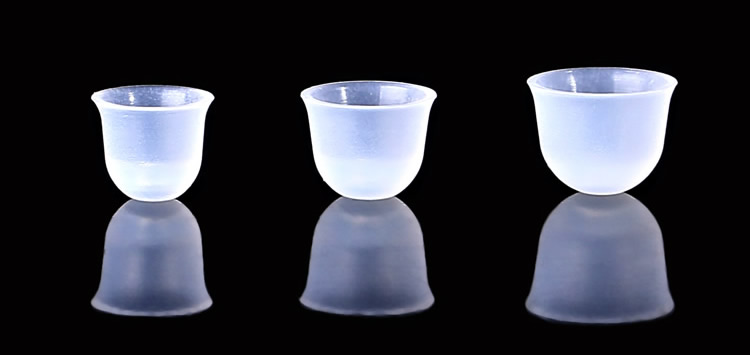
However, for individuals with severe hearing loss across all frequencies, a closed dome is mandatory. Because severe loss requires significant volume amplification, the sound waves traveling through an open dome would leak out of the ventilation holes, hit the external microphone, and cause continuous feedback whistling. Closed domes isolate the sound path, allowing the device to deliver maximum power safely.
While domes are physically easy to swap, changing styles alters the sound profile. Switching to a closed dome traps more low-frequency sound, which may require adjusting your device's volume or equalization settings.
For optimal hygiene and sound performance, both open and closed silicone domes should be replaced every 2 to 3 months, or sooner if the silicone becomes torn, discolored, or hardened by earwax.
Whistling (feedback) occurs when amplified sound leaks out of the open vents and re-enters the microphone. If this happens consistently, your device's volume may be set too high for an open dome configuration.