
When considering hearing aids, many people ask: "Will it be too noticeable? Will others see it easily?"
This is why custom hearing aids (including IIC and CIC models) have become increasingly popular. Compared to traditional Behind-the-Ear (BTE) devices, custom models are compact, discreet, and blend seamlessly with skin tones, offering a near-invisible look that restores hearing without compromising your appearance.
However, custom devices are not suitable for everyone. So, who is the ideal candidate? Here are the 5 key factors to consider:

Since custom hearing aids are custom-molded to your unique anatomy, they require a normal, non-narrow ear canal for optimal fit and maximum discretion.
Expert Note: A healthy ear canal is a strict prerequisite. If you suffer from chronic otitis media (middle ear infections), ear discharge, or severe inflammation, custom devices may not be ideal. Their tight fit reduces ventilation, which can trap moisture, worsen infections, or damage the device's internal components.
Just like prescription glasses, greater hearing loss requires more amplification power, which usually translates to a larger device size. Custom hearing aids are best suited for mild to severe hearing loss (typically between 40 to 80 dB HL). While high-power custom options exist, individuals with profound hearing loss are generally better served by Behind-the-Ear (BTE) models.
Whether you are a working professional, socially active, or a senior conscious of your appearance, custom devices (especially IIC/CIC styles) provide ultimate privacy by hiding deep inside the ear canal.
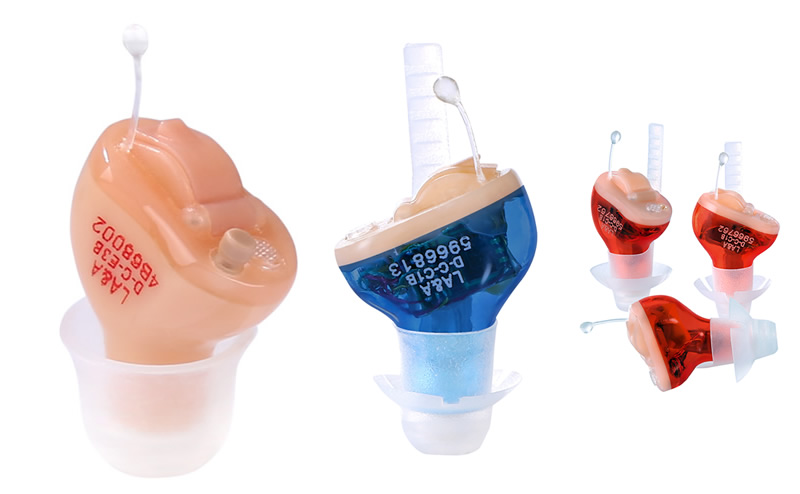
Wearing a BTE device alongside glasses and face masks often creates clutter behind the ear, increasing the risk of the hearing aid slipping off. In contrast, custom devices sit securely inside the ear canal. They stay firmly in place during daily activities, running, talking, or eating, significantly lowering the risk of accidental loss.
Custom devices leverage your ear's natural acoustics:
| Feature | Custom Hearing Aids (IIC/CIC/ITC) | Behind-the-Ear (BTE/RIC) |
|---|---|---|
| Discretion | Excellent (Nearly Invisible) | Moderate (Visible from behind) |
| Fit & Security | High (Molded to ear canal) | Moderate (Can conflict with glasses/masks) |
| Sound Naturalness | High (Uses natural ear anatomy) | Standard (Longer sound path) |
| Ear Health Requirements | Strict (Must be dry and infection-free) | Flexible (Better ventilation) |
| Fitting Range | Mild to Severe | Mild to Profound |
When it comes to hearing care, "smaller is not always better." The best hearing aid is the one that allows you to hear clearly, feels comfortable, and fits your lifestyle.
If you are unsure whether your ear canal or hearing profile is suitable for a custom device, we highly recommend booking a comprehensive hearing test at a professional audiology clinic. A licensed audiologist or hearing instrument specialist can recommend the ideal style tailored precisely to your hearing goals.