
Proper daily cleaning and moisture maintenance are the most effective ways to extend the lifespan of your device and maintain crystal-clear sound quality. As a leading medical-device manufacturer, CADENZA provides this authorized guide to help users and distributors prevent common hearing aid failures caused by moisture, earwax, and static electricity.
Daily cleaning prevents acoustic blockage and hardware corrosion. Hearing aids are precision medical devices constantly exposed to earwax, body sweat, and environmental humidity. Without routine care, sound outlets clog, and internal electronic components degrade prematurely.
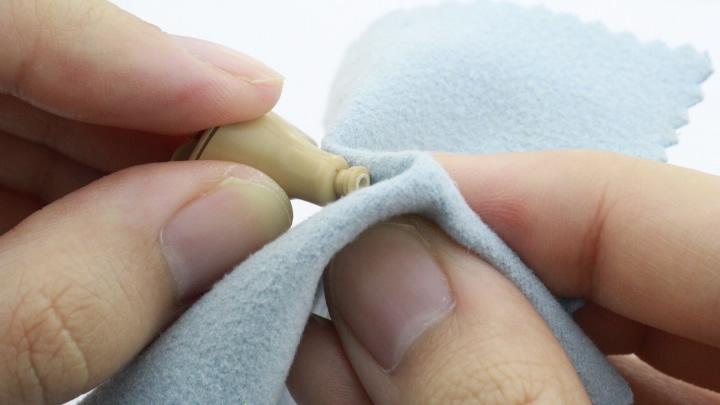
Use a soft, dry cloth and a dedicated cleaning brush every evening to clear debris from the device. Earwax is the leading cause of receiver and microphone failures, particularly in Custom In-The-Ear (ITE) and Receiver-In-Canal (RIC) models.
Gently wipe the hearing aid housing with a dry, lint-free microfiber cloth to remove oils, sweat, and dust. Never use alcohol, wet wipes, or chemical solvents, as they can dissolve the protective medical-grade coating or damage internal circuitry.
Brush the microphone ports, receiver openings, and battery compartment using a specialized hearing aid brush. Always point the sound outlet downward while brushing so that loose earwax particles fall out naturally rather than sliding deeper inside.
Check the silicone ear domes for hardening, yellowing, or tears, and replace them as needed. Clean detachable domes with mild soapy water only after removing them from the device. If your RIC or ITE hearing aid uses a wax guard (wax filter), replace it immediately when you observe visible blockage or a drop in volume.
Store your hearing aids in a dedicated dehumidifying dry box with the battery door open every night. Keeping the device dry prevents internal moisture from corroding the delicate wiring, which is critical for users living in humid regions or prone to heavy sweating.
Turn off the hearing aid and fully open the battery door before storage. This allows residual internal moisture to evaporate. For non-rechargeable models, remove the zinc-air batteries if the device will not be used for several days to prevent leakage.
Use a standard silica gel drying jar or an electronic drying station. For silica jars, replace the desiccant crystals once they change color. For electronic drying stations, run a cycle 3 to 4 times a week during summer or humid seasons, and 2 to 3 times weekly in winter. Always remove standard zinc-air batteries before placing the device in an active electronic dryer.
Adapt your maintenance routine to address summer humidity and winter condensation. Drastic seasonal shifts directly affect the acoustic output and physical stability of the device.
Wipe sweat off the device immediately during hot weather. Utilize electronic dehumidifiers regularly to counteract high environmental humidity.
Condensation occurs when moving between cold outdoor air and warm indoor environments, creating water droplets inside the acoustic tube. Detach the earmold tube and use a multi-functional air blower pump to dry it. Additionally, static electricity from winter clothing can disrupt digital programming; remove your hearing aids before putting on or taking off sweaters.
Wait exactly two minutes after peeling off the protective sticker before inserting a new zinc-air battery. This delay allows atmospheric oxygen to enter and fully activate the chemical components, ensuring optimal voltage and maximum battery life.
Replace the battery immediately when the low-power alert sounds. Never leave depleted batteries inside the compartment, as chemical leakage can permanently corrode the internal receiver and amplifier circuitry.
Schedule a professional deep cleaning and acoustic performance check at an authorized dispensing center every 1 to 3 months. Professional audiologists use specialized vacuum pumps and ultrasonic cleaners to clear deep-seated debris that home tools cannot reach, ensuring your device remains fully compliant with clinical standards.